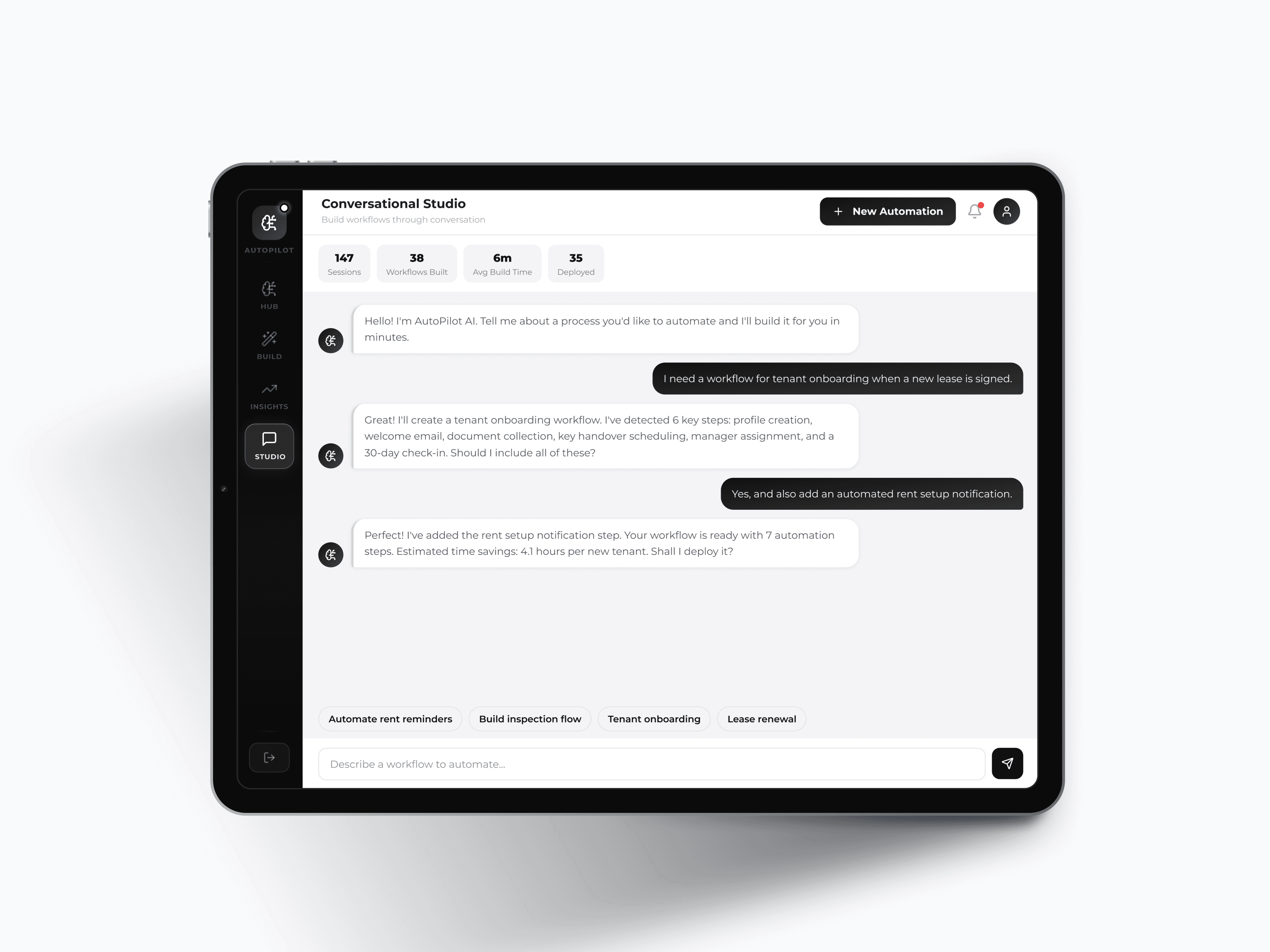
AutoPilot AI
Intelligent automation platform with AI decision-making, predictive workflows, and self-optimizing processes.

Introduction
AutoPilot AI transcends traditional rule-based automation by incorporating artificial intelligence that makes contextual decisions based on historical patterns, current conditions, and predicted outcomes. The platform handles routine property management decisions autonomously while learning from every interaction to continuously improve performance.
By automating not just processes but also the decisions within those processes, AutoPilot AI reduces the need for human intervention in routine situations. Property managers maintain oversight and control while benefiting from AI-powered efficiency that adapts to changing circumstances.
Autonomous Decision-Making
The AI system handles routine operational decisions including maintenance request approvals under specified thresholds, vendor selection based on availability and performance history, and communication prioritization based on urgency assessment. These decisions follow learned patterns from historical manager actions.
Human oversight remains integrated through exception handling, where unusual situations are flagged for manual review rather than autonomous processing. The AI explains its decision logic, allowing property managers to understand reasoning and provide corrective feedback when necessary.
Predictive Workflow Initiation
Rather than waiting for events to trigger workflows, the predictive engine anticipates needs and initiates processes proactively. For example, the system schedules HVAC maintenance before peak seasons based on equipment age and usage patterns, or reaches out to at-risk tenants before lease expiration.
This anticipatory approach prevents issues rather than reacting to them, improving operational outcomes while reducing crisis management. The AI learns which proactive interventions deliver the best results and adjusts its predictive models accordingly.
Self-Optimizing Processes
Machine learning continuously analyzes workflow performance, testing variations in timing, messaging, and sequencing to identify approaches that generate better outcomes. The system measures success based on response rates, completion times, tenant satisfaction, and other key metrics.
Optimization occurs automatically without manual intervention, with the AI gradually shifting toward more effective approaches while maintaining statistical controls to avoid premature conclusions. Performance dashboards show optimization progress and quantify improvements over time.
Sentiment Analysis and Prioritization
Natural language processing analyzes tenant communications to detect urgency, frustration, or satisfaction levels that inform response prioritization. Messages expressing strong negative sentiment receive immediate attention while routine inquiries follow standard processing timelines.
This intelligent prioritization ensures issues likely to escalate receive prompt attention, improving tenant satisfaction while allowing property managers to focus their personal attention where it delivers the most value. The sentiment models adapt to organizational communication patterns over time.
Conclusion
AutoPilot AI represents the next evolution in property management automation, where artificial intelligence doesn't just execute pre-defined rules but actively makes decisions and optimizes processes. This intelligent automation enables property managers to scale operations without proportionally increasing staff while improving service quality through data-driven decision-making.