PredictiveAI
Preventive maintenance platform with failure prediction, asset lifecycle tracking, and optimization scheduling.

Introduction
PredictiveAI shifts maintenance management from reactive repair to proactive prevention by forecasting equipment failures and scheduling maintenance before breakdowns occur. The platform leverages machine learning models trained on extensive equipment failure data to identify patterns that precede system failures.
By preventing emergency repairs through predictive maintenance, PredictiveAI reduces tenant disruption, lowers overall maintenance costs, and extends equipment lifespan. This strategic approach to maintenance management treats property systems as managed assets rather than simply addressing failures as they occur.
Equipment Failure Prediction
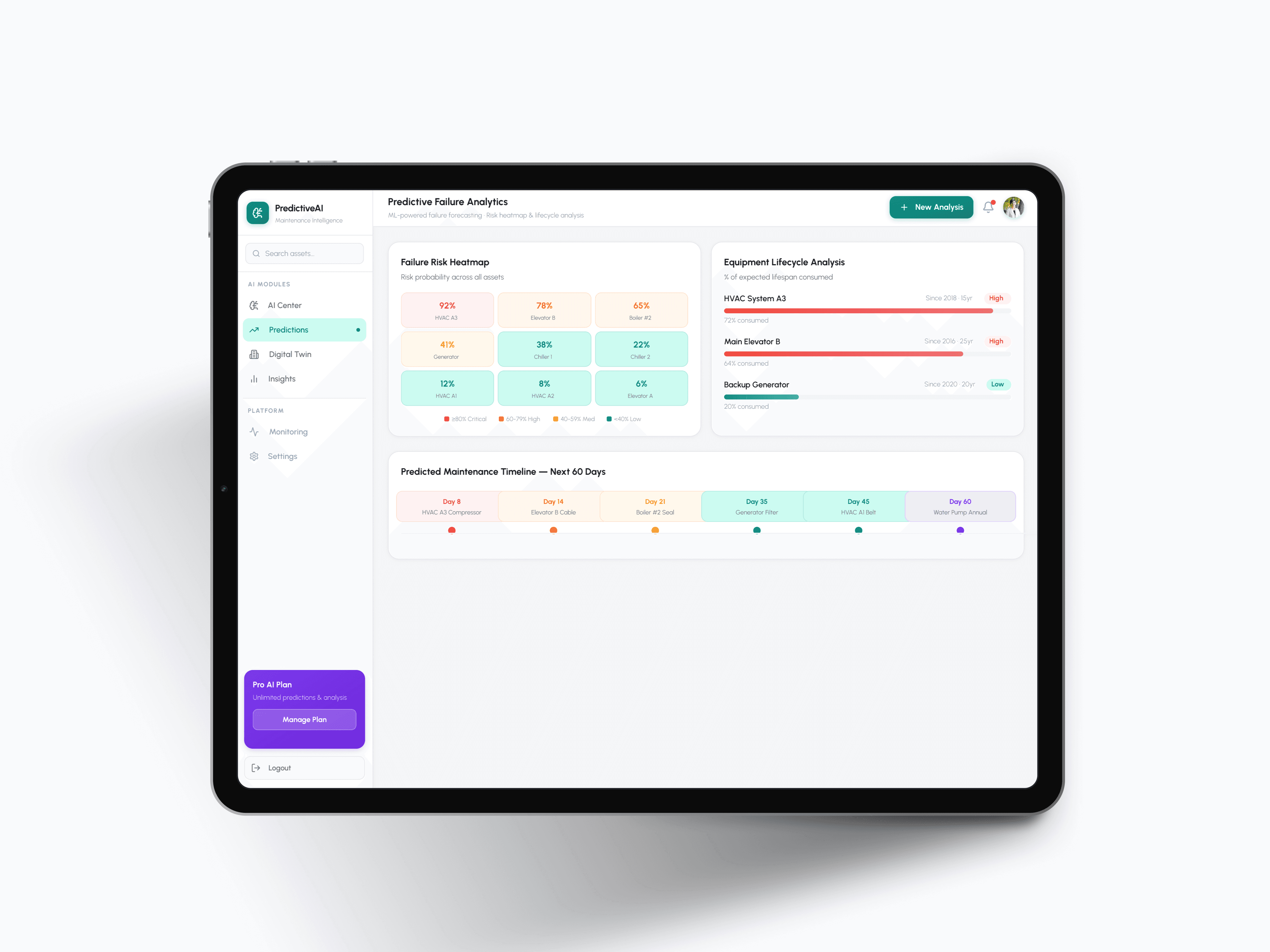
Machine learning models analyze historical work order data, equipment age, seasonal factors, and usage patterns to predict when HVAC systems, water heaters, appliances, and building components are likely to fail. Predictions generate 30-90 days in advance, providing sufficient time to schedule preventive service.
The prediction accuracy improves continuously as the system processes more data from both preventive maintenance and actual failures. Property managers receive confidence scores with each prediction, allowing risk-based decisions about which preventive actions to prioritize.
Preventive Maintenance Scheduling
Automated scheduling coordinates preventive maintenance across portfolios, optimizing timing to balance tenant convenience, vendor availability, and seasonal considerations. The system avoids scheduling HVAC maintenance during temperature extremes and coordinates multiple service needs to minimize tenant disruption.
Service reminder workflows notify vendors of upcoming scheduled maintenance with sufficient lead time for planning. Automated tenant notifications inform residents of scheduled service dates and expected access requirements, reducing coordination friction.
Asset Lifecycle Management
Comprehensive equipment tracking maintains complete service histories for every major system and appliance, documenting installation dates, repair history, maintenance records, and replacement costs. This data forms the foundation for lifecycle planning and capital budgeting.
Remaining useful life calculations estimate when equipment will require replacement based on age, maintenance history, and usage intensity. These projections inform capital expenditure planning and help property managers make data-driven decisions about whether to repair or replace aging equipment.
Cost-Benefit Analysis
The platform compares preventive maintenance costs against predicted emergency repair expenses and system replacement costs to recommend optimal intervention timing. This financial modeling helps property managers prioritize limited maintenance budgets toward interventions with the best return on investment.
Portfolio-level analysis identifies properties where preventive maintenance would deliver the highest value based on equipment age profiles and historical failure rates. This strategic perspective enables efficient resource allocation across multi-property portfolios.
Conclusion
PredictiveAI transforms maintenance from an expense to be minimized into a strategic investment that protects property values and enhances tenant satisfaction. By predicting failures and optimizing preventive maintenance timing, the platform delivers superior outcomes while reducing total maintenance costs over equipment lifecycles.